When most people think of keeping a dog happy, they focus on exercise — walks, runs, and playtime in the yard. But mental stimulation is just as important for a dog’s well-being, especially if you live in an apartment or spend more time indoors.
Mental enrichment helps prevent boredom, anxiety, and even destructive behaviors. In this guide, you’ll learn how to engage your dog’s brain using fun, simple, and effective activities that can be done right in your living room.
Why Mental Stimulation Matters
Dogs are intelligent, curious animals. They need to problem-solve, explore, and think. When they don’t get enough mental engagement, you may notice:
- Excessive barking
- Chewing on furniture or shoes
- Digging indoors or pacing
- Hyperactivity even after physical exercise
Providing mental challenges can be just as tiring — if not more — than a long walk, and it leads to a more balanced, calm dog.
Rotate Toys and Add Novelty
Leaving the same toys on the floor every day will quickly bore your dog. Instead:
- Rotate toys every 3 to 5 days
- Introduce new textures (rubber, rope, fabric)
- Choose interactive toys that move or squeak
Tip: Don’t give all toys at once. Keep a few hidden and surprise your dog with one during the day.
Use Puzzle Toys and Treat Dispensers
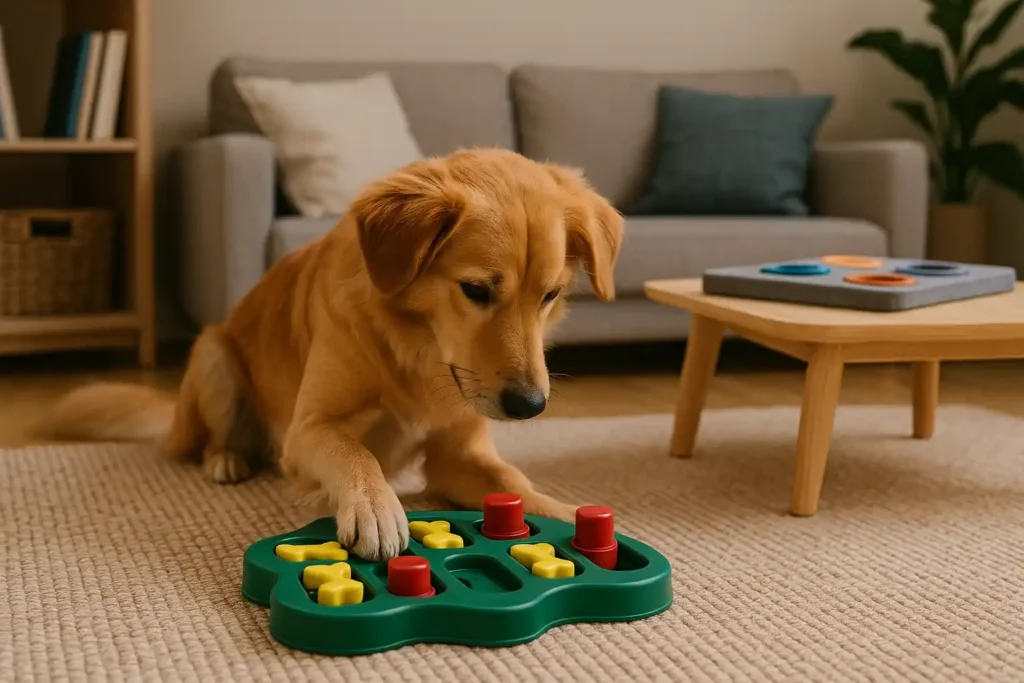
Puzzle feeders are one of the best ways to challenge your dog’s brain while also providing a reward. Try:
- Snuffle mats (hiding treats in a shaggy mat)
- Kong toys stuffed with peanut butter or banana
- Slide puzzles where your dog moves pieces to find treats
Start with easy ones and gradually increase difficulty. These toys slow down eating and make feeding time more exciting.
Teach New Tricks and Commands
Dogs love learning — and even older dogs can enjoy new challenges. Use 5 to 10-minute sessions to teach:
- Classic tricks: Sit, Stay, Paw, Roll Over
- Fun tricks: Spin, Crawl, Play Dead
- Practical commands: Leave it, Go to bed, Find it
Use positive reinforcement: treats, praise, or their favorite toy. Repetition builds confidence and strengthens your bond.
Make an Indoor Obstacle Course
Turn your home into a canine playground using things you already have:
- Pillows or chairs for weaving
- Blankets for tunnels
- Brooms laid on books for jumps
Guide your dog through the course and reward progress. This is great for rainy days or when you’re low on time.
Introduce Scent Games
Dogs explore the world primarily through their noses. Engaging their sense of smell is an excellent way to provide enrichment. Try these:
- Hide and seek with treats around the room
- Use a scent trail (drag a treat on the floor and hide it)
- Hide a favorite toy and ask, “Where is it?”
Scent work is particularly satisfying for hunting breeds, but all dogs benefit.
Practice Meal Time Challenges
Instead of feeding your dog from a plain bowl, make mealtime an activity:
- Scatter kibble on a clean floor or mat
- Use a slow feeder bowl with ridges
- Freeze meals in puzzle toys
This not only slows down eating but also turns daily feeding into an enrichment opportunity.
Give Them a “Job” to Do
Some dogs, especially working breeds like Border Collies or Huskies, need a purpose. You can give simple jobs such as:
- Carrying a toy to another room
- Putting toys back in a box
- Balancing treats on their nose before eating
Teaching structured tasks keeps their mind active and gives them a sense of accomplishment.
Play “Which Hand?” Game
Hold a treat in one of your closed fists and let your dog choose. It’s a fun and easy game that requires no equipment and gives instant feedback.
- Switch hands often
- Reward when they choose correctly
- Use different scents to increase challenge
This builds focus and scent discrimination skills.
Set Up a Viewing Spot
Dogs love watching the world go by. If you can, set up a safe window perch where your dog can see birds, people, or cars. It’s passive enrichment that can entertain them for hours.
- Add a comfy mat or bed
- Keep the blinds open
- Rotate visual stimuli (window clings, bubble machines)
Just make sure they don’t bark excessively or get overstimulated.
Try Interactive Videos or Music
Some dogs enjoy dog-friendly videos or calming music. Try:
- YouTube channels made for dogs (birds, squirrels, etc.)
- Classical or instrumental music
- “Dog TV” streaming platforms
This won’t work for every dog, but it can be a relaxing form of passive enrichment, especially when left alone.
Final Thoughts: A Tired Brain Is a Happy Brain
Mental stimulation is one of the most overlooked parts of dog care, yet it’s crucial for their emotional and cognitive health. When your dog’s brain is engaged, they become more relaxed, better behaved, and overall happier.
You don’t need expensive gadgets or professional training — just a little creativity and consistency. Start with a few of the tips above and rotate activities weekly. Your dog will thank you with more wagging, less barking, and a deeper connection with you.